


For 128 years, Wyman has helped teens thrive by learning what works and improving along the way. Our strong focus on research allows us to:
- Measure outcomes and use the results for quality improvement
- Develop and evaluate innovations
- Accelerate learning through local and national knowledge exchanges
- Ensure our programs truly make a difference
Approach and Theory of Change
Wyman programs are rooted in Wyman’s Framework for Thriving Youth, a carefully crafted theoretical foundation for Wyman’s programming which captures the essential elements of a transformative youth development approach and the ultimate outcomes that we strive for all young people to achieve: educational + career success, healthy behaviors and relationships, and life and leadership skills.
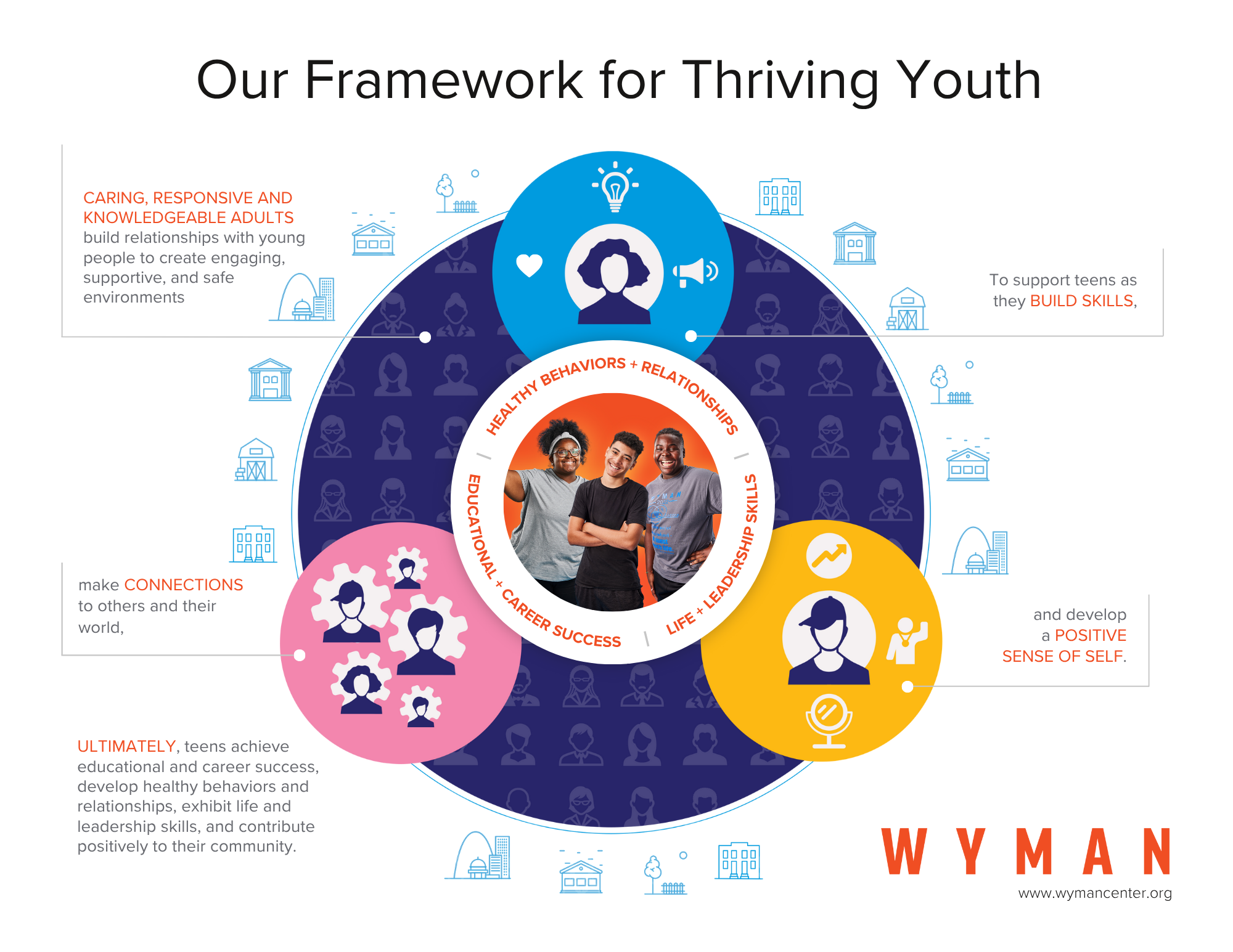
Our Framework for Thriving Youth emphasizes building skills, developing a positive sense of self, and making connections to others as key levers to achieving these outcomes. Surrounding this work are caring, responsive, and knowledgeable adults who build relationships with young people to create engaging, supportive, and safe environments where young people are supported to achieve positive growth.
Our Framework is grounded in youth development research and serves as the compass for all Wyman programming.
Program logic models map out each program’s specific components and strategy for change within the context of this larger Framework and guide our outcomes measurement approach.
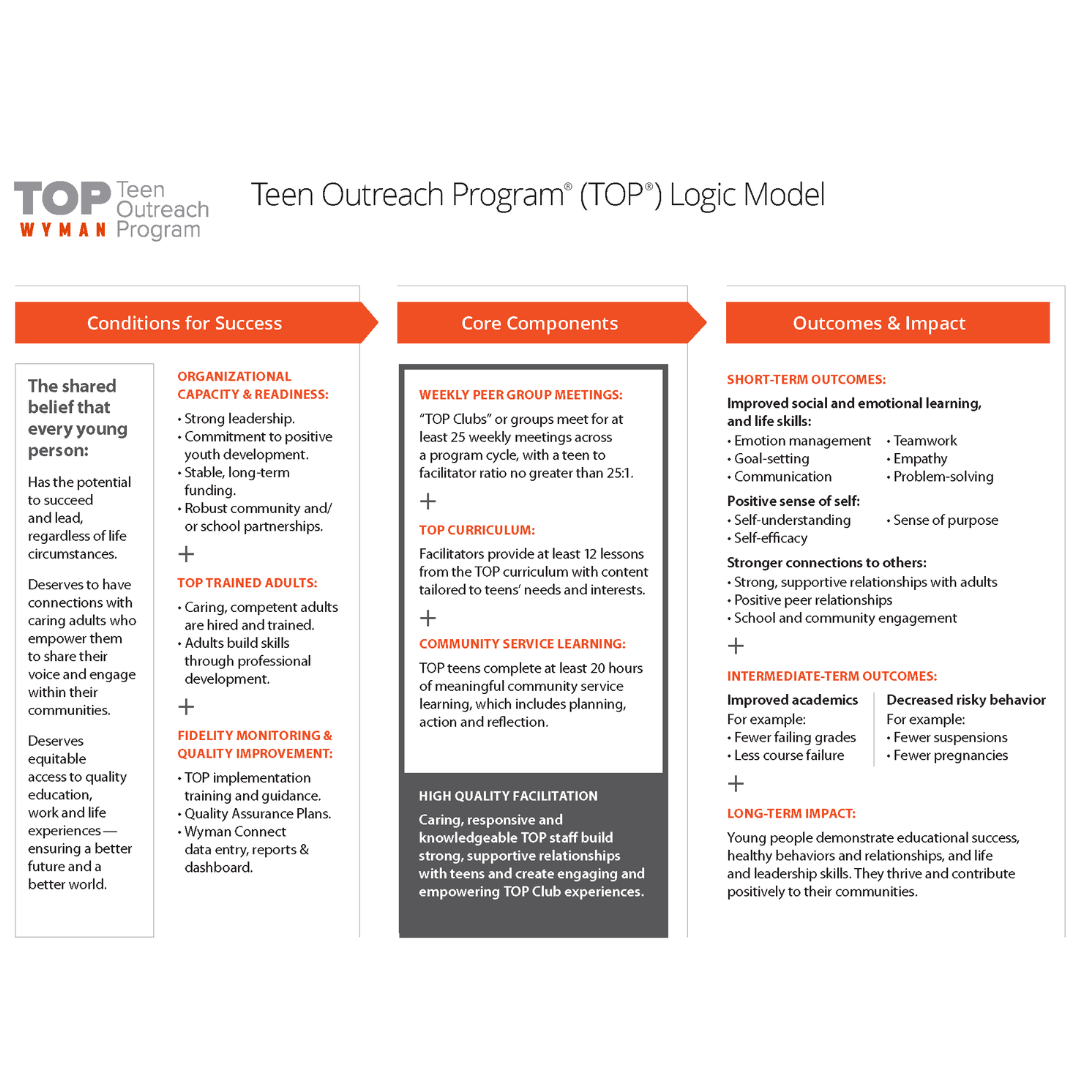
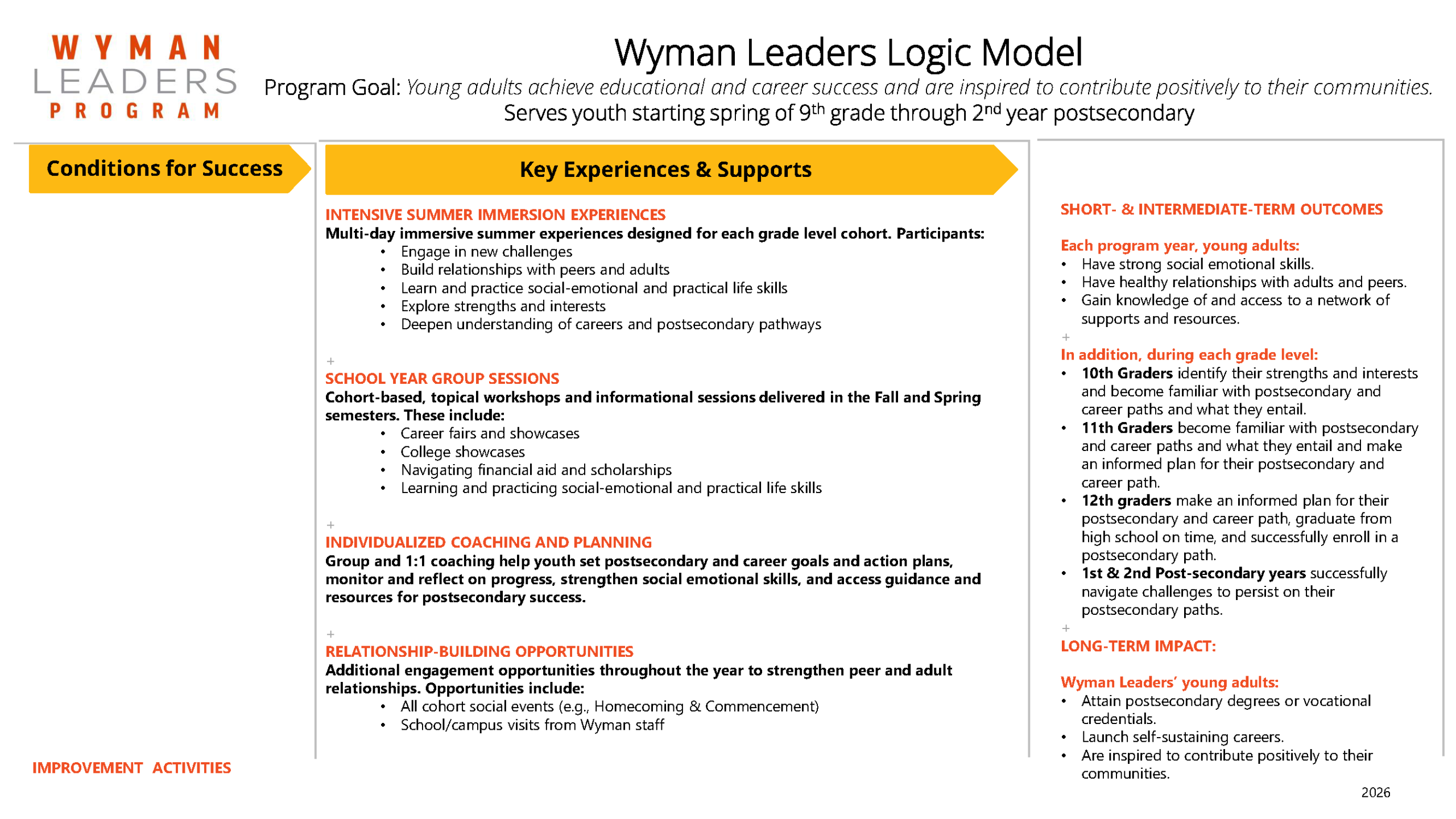
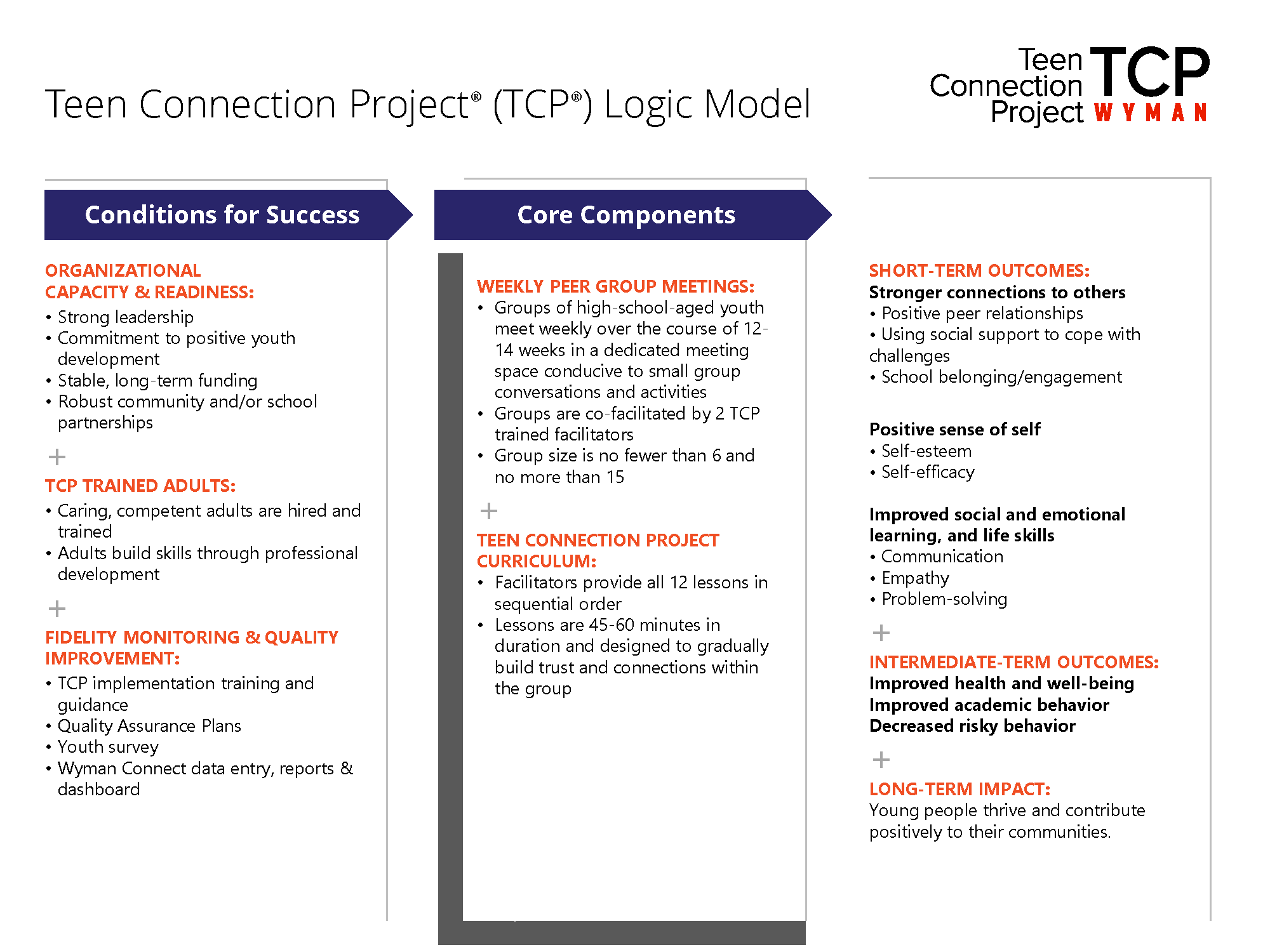
More about our research
Case Studies and Presentations
Results and Recognition
Read about the results of each of our three proven programs:
Summary of TOP Results
Summary of TCP Results
Wyman Leaders Study Summary
Both TOP and TCP are recognized as Promising Programs by Blueprints for Healthy Youth Development and received CASEL’s highest designation for quality programming, among several other evidence-based recognitions.
TOP Evidence-Based Recognitions
TCP Evidence-Based Recognitions
Research and Learning Highlights from 2025
For 128 years, Wyman has helped teens thrive by learning what works and improving along the way. Our strong focus on research allows us to track outcomes, make changes when needed, and ensure our programs truly make a difference. In 2025, our Research and Learning team shared powerful findings that are strengthening our work with teens.
The Research and Learning team shared its work at the Advancing School Mental Health Conference, highlighting Rapid Cycle Evaluation: a simple but powerful way to listen to teens and use their feedback to strengthen TCP programming. Used in Wyman’s delivery of TCP at University City High School, this approach helps facilitators hear directly from teens and understand – right away – what’s working and how connected they are to peers. This allows facilitators to make quick changes so every teen has a meaningful experience and feels seen and supported.
The Research and Learning team also explored the long-term impact of Wyman Leaders while collaborating on a redesign of the program to ensure it continues to meet teens’ needs. They compared Wyman Leaders Alumni to students from the same high schools during the same years. The results were powerful: Wyman Leaders alumni were more likely to enroll in and complete a postsecondary program than their peers. These findings show how important it is for teens to develop support networks beyond their families and build life and leadership skills. Read a summary of the findings here.
Watch this video to learn more about Wyman’s Research and Learning process
It is hard to find organizations that are really committed to doing evidence-based work because it’s incredibly logistically challenging. Most organizations…don’t have the resources to do that. So Wyman is unique in that regard and it’s crucial because as you move beyond having powerful anecdotes describing the ways you’ve helped kids, people who want to fund programs and policy makers really want to see the hard data; they want to see rigorously evaluated programs and Wyman is now producing those.
Backed by my research, it’s evident that the collaboration between Missouri State University and the Wyman Center significantly bolsters the success of first-generation and low-income students. The data underscores that this partnership bridges educational gaps and cultivates a sense of belonging and holistic growth, aligning perfectly with the institutions’ dedication to fostering inclusive excellence.
Learning out Loud: Wyman’s Research and Learning Blog
Building Connection and Belonging: National Findings from Wyman’s Teen Connection Project
by Nicki Thomson, Senior Director of Research & Learning, and Grace Bramman, Director of Evaluation [...]
02
Sep
Sep
How Wyman’s Teen Outreach Program Promotes Positive Outcomes for Teens
How Wyman’s Teen Outreach Program (TOP) Promotes Positive Outcomes for Teens: Implications for Practice by [...]
30
Apr
Apr
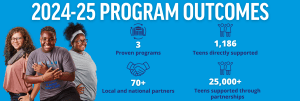
2024-25 outcomes show positive impact of Wyman programs
Adolescence is often a time of real challenge and incredible possibility. At Wyman, we meet [...]
23
Apr
Apr
How Wyman Leaders Shapes Futures
How Wyman Leaders Shapes Futures By Nicki Thomson, PhD, Senior Director of Research and Learning, [...]
07
Jul
Jul
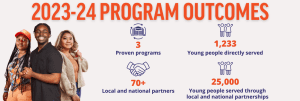
Wyman’s 2023-24 outcomes show positive impact of programs
Wyman’s 2023-24 Program Outcomes Adolescence can be a period of significant challenges. It is also [...]
16
May
May
2024 Research & Learning Highlights
2024 Research & Learning Highlights Background In 2024, Wyman’s Research & Learning department partnered with [...]
23
Apr
Apr
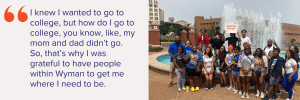
Wyman’s scholarship partnerships: A critical source of support for young people
by Nicki Thomson, PhD; Wyman’s Senior Director of Research and Learning Wyman is committed to [...]
06
Jan
Jan
How it works: Effective partnerships to support equity in degree completions
by Nicki Thomson, PhD Senior Director, Research and Learning Background In collaboration with Dr. Florian Sichling [...]
08
Feb
Feb
The long-term, positive impact of Wyman Leaders
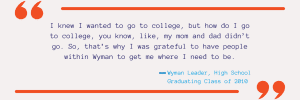
by Nicki Thomson, PhD Senior Director, Research and Learning Wyman is committed to ensuring strong [...]
29
Aug
Aug
Learning and Responding to Youth Needs: Wyman’s Commitment to Doing the Next Right Thing, Part one of a two-part series
Through 2020 and into 2021, our nation has dealt with the “triple pandemic” of COVID-19, [...]
26
Oct
Oct
Learning and Responding to Youth Needs: Wyman’s Commitment to Doing the Next Right Thing, Part two of a two-part series
In the first part of this series, Learning and Responding to Youth Needs: Wyman’s Commitment [...]
25
Oct
Oct
It’s Time to Prioritize Healthy Adolescent Social Connections
by Nicki Thomson, Senior Director of Research and Learning, and Grace Bramman, Associate Director of [...]
07
Jul
Jul
For Teens in TN Residential Care Centers, TOP Provides Voice, Choice, and Connection to Community
At any given time, more than 8,000 young people in Tennessee, often coming from very [...]
16
Apr
Apr
A Focus on Connections – Now, and Beyond the Pandemic
“I barely interact with people and I’m always cooped up inside the house.” “For [...]
14
Dec
Dec