

How Wyman’s Teen Outreach Program (TOP) Promotes Positive Outcomes for Teens: Implications for Practice
by Nicki Thomson, Senior Director, Research and Learning; Grace Bramman, Director, Evaluation & Grants; Annie Philipps, Director, Teen Outreach Program.
Special acknowledgment to Xinchang Zhou, University of Illinois Urbana-Champaign, for data analysis support on this project. Research made possible with support from The Saigh Foundation.
About TOP
Wyman’s Teen Outreach Program (TOP) is a nationally recognized, evidence-based, positive youth development program that builds strong social-emotional skills and decreases risk behaviors. TOP’s effectiveness is supported by a broad evidence base that confirms its positive impact on teens’ lives, particularly in reducing academic and sexual risk behavior. Several rigorous studies have shown that teens participating in TOP displayed fewer academic and sexual risk behaviors with benefits lasting beyond the end of the programi. Multiple independent reviews of the evidence formally recognize TOP as an evidence-based program, including the Collaborative for Academic, Social and Emotional Learning (CASEL).
TOP features a unique combination of engaging curriculum-guided weekly meetings, Community Service Learning (CSL), and supportive relationships with adults. TOP is delivered weekly over 9 months within a group setting, called “Clubs,” and is facilitated by highly trained adults. Program activities focus on improving social-emotional learning and life skills, supporting the development of a positive sense of self and strengthening connections to others. To ensure TOP teens receive a consistent, high-quality experience across settings, TOP has clearly defined fidelity expectations:
- Facilitated by adults that successfully complete the TOP Training of Facilitators
- Maintain a teen to adult ratio of no more than 25:1
- Include at least 25 weekly meetings
- Include sufficient opportunities for teens to complete at least 20 hours of CSL
- Include at least 12 lessons from the TOP Curriculum
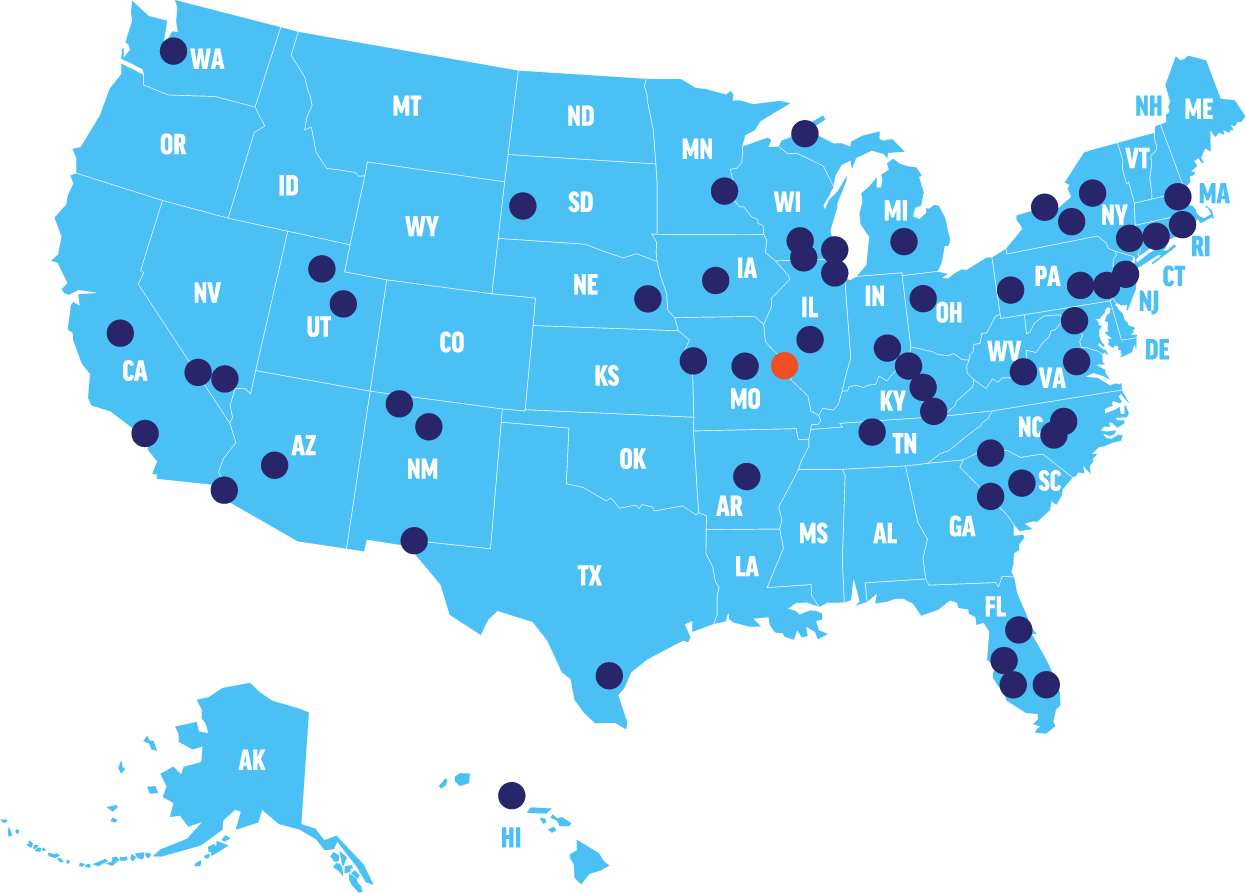
Currently, TOP is implemented by more than 70 organizations in 32 states and the District of Columbia, including directly by Wyman staff in the St. Louis area. TOP is implemented in a variety of settings including in schools, after school and through community-based organizations.
Our Study Approach
We explored data collected by national TOP implementation sites to better understand the benefits of TOP for participating teens, and whether outcomes are linked to program quality and completion of the full program. Specifically, we explored the following questions:
- Do teens experience positive outcomes in TOP?
- Are positive outcomes linked to teens’ program experiences, including relationships with facilitators or quality of the program environment?
- Are positive outcomes linked to amount of program participation?
Who Participated
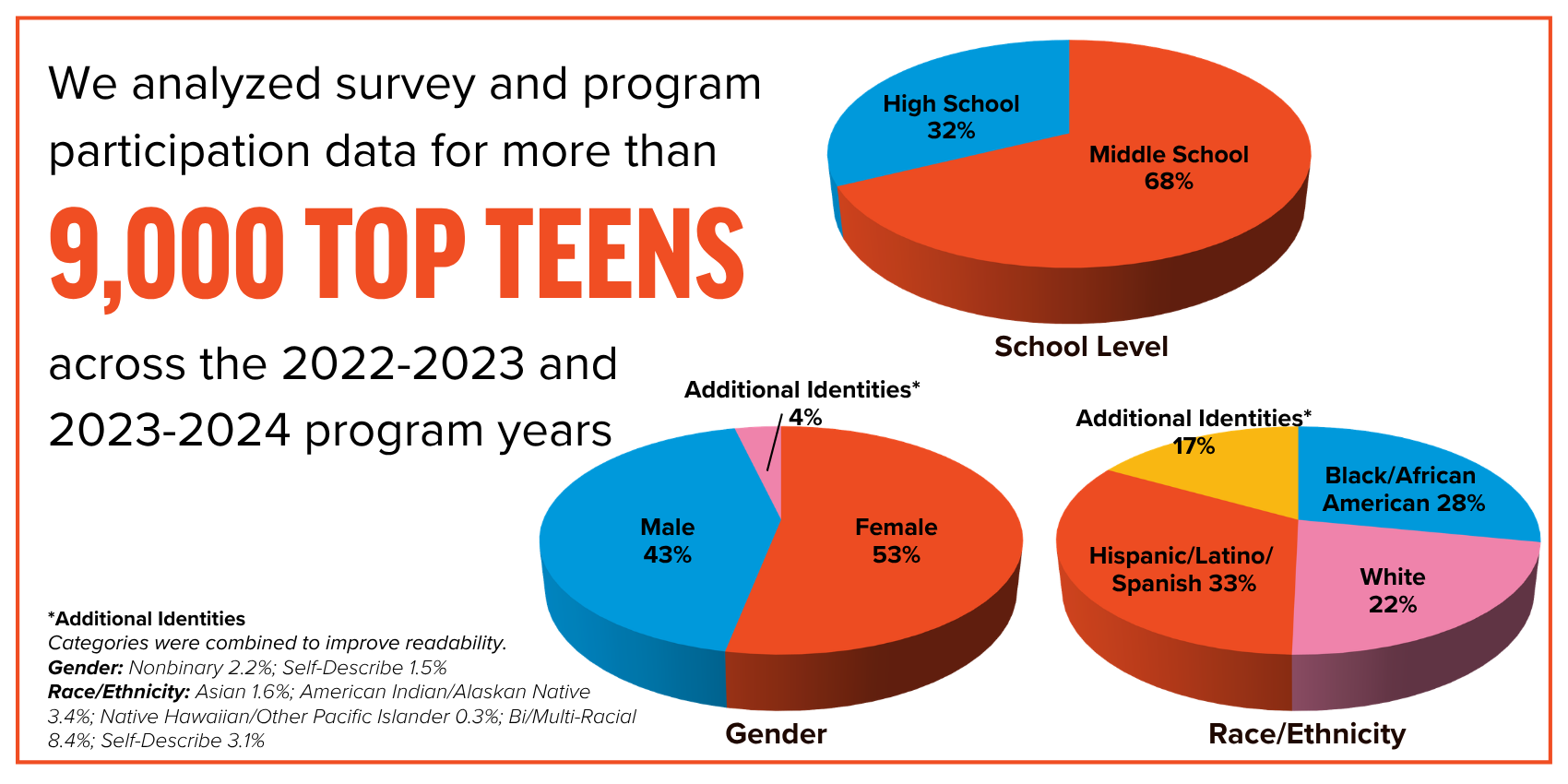
We analyzed teen survey and program participation data from program year 2022-2023 and program year 2023-2024, with data from more than 9,000 total teens representing an average of 36 partners each year and a total of 43 unique partners across the two years. Over half of the teens identified as female and the largest racial/ethnic group identified, representing approximately one-third of the sample, was Hispanic/Latino/a/x. A majority (about two-thirds) reported being in middle school (6th, 7th or 8th grade).
What We Measured
Outcomes and program quality were measured using the TOP Teen Pre and Post Surveys. These surveys have been used nationally by organizations implementing TOP since the 2019-2020 program year and gather basic demographic information along with data on academic risk behavior, pregnancies and births, social-emotional skills, and teens’ input on their program experiences, including measurement of facilitator relationship and program environment quality.
Academic & Behavioral Outcomes
Grades. Teens reported their grades in school during last school year on the pre survey and for the current school year on the post survey with the following response options: Mostly As; Mostly Bs; Mostly Cs; Mostly Ds; Mostly Fs; Not Sure.
Academic Risk Behavior. On the pre survey, teens were asked to think back to the previous school year and indicate whether they had engaged in any of the following behaviors (with Yes or No response options):
- Skipping class without permission
- Receiving any failing grades
- Getting suspended (in school or out of school)
The post survey included the same set of questions, asking teens to reflect on the current school year.
Sexual Risk Behavior. Teens reported on the pre survey if they “have ever been pregnant or caused a pregnancy” and if they “have ever had a baby or fathered a baby.” On the post survey they were asked the same questions referring to the current school year. These items have a Yes or No response format.
Social-Emotional Skills
Teens’ social-emotional learning (SEL) is measured on the post survey asking teens to reflect on their skills before the program started and again at the end of TOP. Ten SEL items measuring goal setting, problem-solving, decision making, communication, emotion management, empathy, self-efficacy, hopefulness and community connection were rated on a 5-point scale ranging from “not at all like me” to “very much like me.”
Program Experiences & Participation
Facilitator Relationships and Program Environment. Teens’ relationships with facilitators and program environment quality were measured on the post-survey with 6 items. Three items measured their relationships with facilitators, such as “TOP facilitators care about me” and three items measured the quality of the program environment such as “I feel safe (physically) during TOP.” These items were rated on the 5-point scale “not at all like me” to “very much like me.”
TOP Participation Data. Each TOP Club collects and submits data on each instance a TOP meeting was held, each TOP Curriculum lesson that was delivered and the number of CSL hours completed per participating teen. Teens who attended at least 75% of meetings and completed at least 20 hours of CSL are considered to have received “full dosage” of TOP.
What We Learned
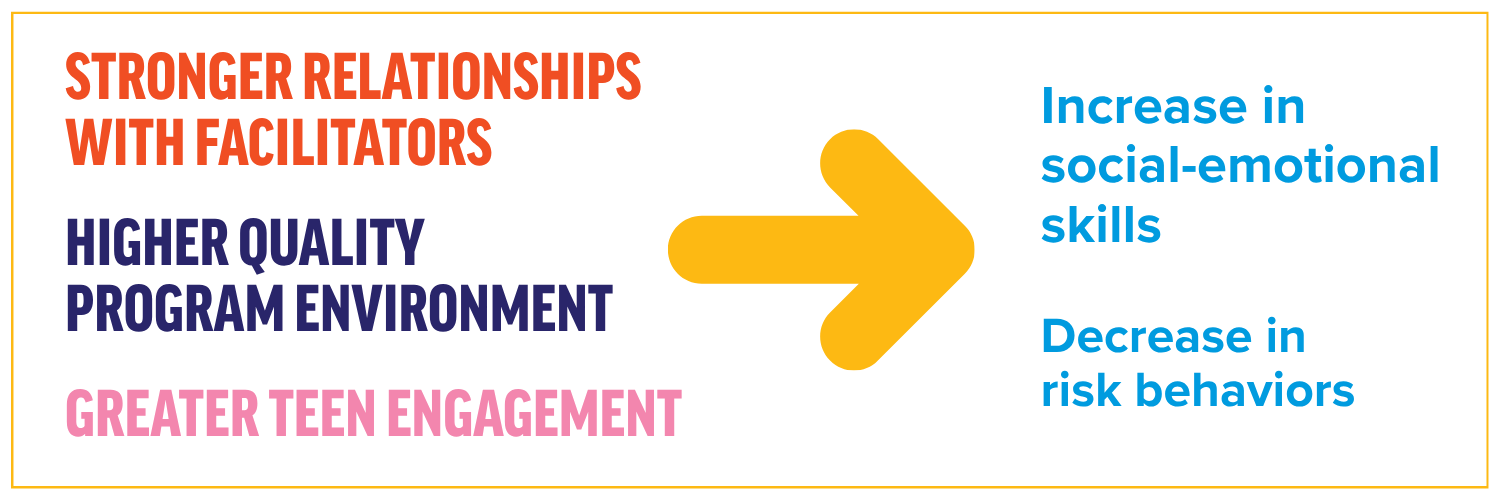
Teens participating in TOP showed meaningful improvements in outcomes including growth in their social-emotional skills and reductions in risk behavior. Strong relationships with facilitators, a high-quality program environment and full program dosage emerged as important factors linked to positive outcomes.
TOP Teens Showed Improvements in Social-Emotional Skills & Reductions in Risk
Across both years, teens participating in TOP demonstrated improvements across all measured social-emotional skill areas. This pattern suggests that participation in TOP is associated with positive development in skills such as goal setting, decision-making, communication, and empathy. Teens participating in TOP also demonstrated a decrease in risk behaviors, including receiving failing grades and getting pregnant or causing a pregnancy (in the 2022-2023 analysis) and receiving in-school suspensions (in both analysis years). Strengthening social-emotional skills is a core outcome of TOP and lays the foundation for additional positive outcomes including academic success and reduced risk behavior.
Facilitator Relationships & Program Environment Matter
Across both program years, teens who reported stronger relationships with their TOP facilitators showed greater improvements in social-emotional skills and academic success (self-reported end of year grades). In 2022-2023, facilitator relationships also predicted overall reduction in academic risk (e.g., suspensions, failing grades, skipping classes). Further, across both years, teens who experienced a higher quality program environment (i.e., feelings of safety and belonging) were more likely to demonstrate improvements in social-emotional skills, with reductions in academic risk observed in the 2023-2024 program year.
Overall, these patterns indicate that TOP teens who experience strong relationships with their program facilitators and those who feel safe and like they belong in TOP are more likely to experience positive program outcomes. This finding is consistent with prior analysis of national TOP data, which also highlighted the importance of facilitator relationships for achieving positive outcomes.ii Together, these findings illustrate that strong facilitator relationships and a high-quality program environment are key levers for achieving positive outcomes in TOP.
Consistent Participation/Program Dosage Relates to Stronger Outcomes
TOP teens who received the full program dosage (attended 75% of meetings and completed at least 20 hours of CSL) were more likely to show improvements in social-emotional skills and end of year grades across both years. They also demonstrated greater reductions in academic risk behaviors, with stronger associations observed in the 2022-2023 analysis. This result underscores the importance of supporting teens to stay engaged in TOP, including consistent attendance and completion of the required 20 hours of CSL, helping ensure that teens experience the intended benefits of TOP.
Actionable Insights & Recommendations
We examined two years of national TOP data to explore outcomes and how program experiences and participation support the benefits of the program. Our analysis offers insight into how TOP works in practice delivered across diverse teen characteristics and. In the broader landscape of positive youth development efforts, these findings reinforce the importance of programs like TOP that combine social-emotional learning, supportive adult relationships and consistent engagement over time. Our findings build on TOP’s existing evidence base showing that teens who participate in TOP experience improvements in skills and reductions in risk behavior, laying a strong foundation for their future success.
Key takeaways include:
- Teens participating in TOP showed consistent improvements in social-emotional skills, academic success, and reduction in risk behaviors.
- Strong relationships with facilitators and a safe, supportive program environment were linked to positive outcomes.
- Teens who received the full program dosage experienced more positive outcomes.
- Similar patterns were observed across two program years and diverse implementation sites, reinforcing the importance of program quality and consistent participation.
Our findings illustrate the importance of intentionality in designing program structure and delivery and support the following recommendations:
- Develop Strong Infrastructure: Strong program infrastructure is essential to prioritizing relationships, creating safe, supportive program environments, and supporting teen engagement. Developing strong infrastructure includes intentional focus in areas such as:
-
- Implementation planning
- A strong Implementation Plan includes clear roles and responsibilities, timelines, recruitment and retention strategies, a program budget, CSL planning, curriculum and CSL sequencing, plans for data collection and professional development opportunities.
- Implementation Plans also typically address continuous quality improvement (CQI) processes, including ongoing monitoring of data on program fidelity, quality, and outcomes to identify areas for improvement and enhancement.
- Staffing plan
- A strong staffing plan considers facilitators’ capacity and the number of Clubs they can effectively manage. Factors like teen needs and group dynamics, for example, may warrant a lower teen: facilitator ratio.
- Co-facilitation is a recommended best practice to support strong teen-adult relationships and teens’ positive experiences in Club. Consider whether it is possible to build co-facilitation into the staffing plan.
- Implementation planning
- Prioritize Relationships: Facilitators who build trust through genuine, consistent and caring interactions with teens build strong relationships. This happens in a variety of ways during program delivery, including getting to know teens, learning teens’ individual interests, and providing coaching and encouragement to teens. Additionally, it is important to consider:
-
- How will a facilitator’s Club schedule and Club sizes impact their capacity to build relationships? Do facilitators have time and opportunity to interact with teens?
- Co-facilitation supports strong relationships, as it lowers the teen: facilitator ratio and offers more opportunity for interaction between facilitators and teens.
- Consider how additional training/professional development supports relationship-building skills. Training on behavior support, building supportive relationships, and youth voice and choice may be helpful to facilitators.
- Create Safe, Supportive Program Environments: To create a safe, supportive program environment, partners and facilitators should consider:
-
- A TOP Club’s physical space should be a consistent, teen-friendly space.
- Create group guidelines, then use these in an ongoing way, such to facilitate behavior support.
- Clubs should have a structured, consistent routine.
- Facilitators should foster a sense of belonging and set and model high standards for interactions based on respect, inclusion and learning.
- Support Teen Engagement: Teen engagement through regular attendance and participation during Club is important for achieving outcomes. To support teen engagement, partners and facilitators should think about:
-
- Consistent use of High Quality Facilitation. Teens should fill most of the talk time; facilitators should lead activities, ask questions, and promote discussion.
- Identifying the specific lessons and CSL opportunities that will be engaging and empowering for teens, considering their needs and interests.
- How to use incentives to support teen attendance. What incentives are appropriate, available and attractive to teens?
- Being intentional about customizing and personalizing the Club culture and routine to teens’ needs and interests.
- How to incorporate youth voice and choice into Club experiences.
If you are a National Network partner, contact your Partner Support Manager for information on tools and resources that are available to support these recommendations!
Sources
iSee Allen, et al., 1997; Allen & Philliber, 2001; Daley, et al., 2015; McBride, Chung, & Robertson, 2016; Walsh-Buhi, et al., 2016; Daley, et al., 2019.
iiThomson, N., Bramman, G., & Guskin, K. (April, 2018). Relationships matter: The role of high-quality adult facilitation in predicting positive youth outcomes. Poster presentation at the Society for Research in Adolescence Biennial Meeting, Minneapolis, MN.